
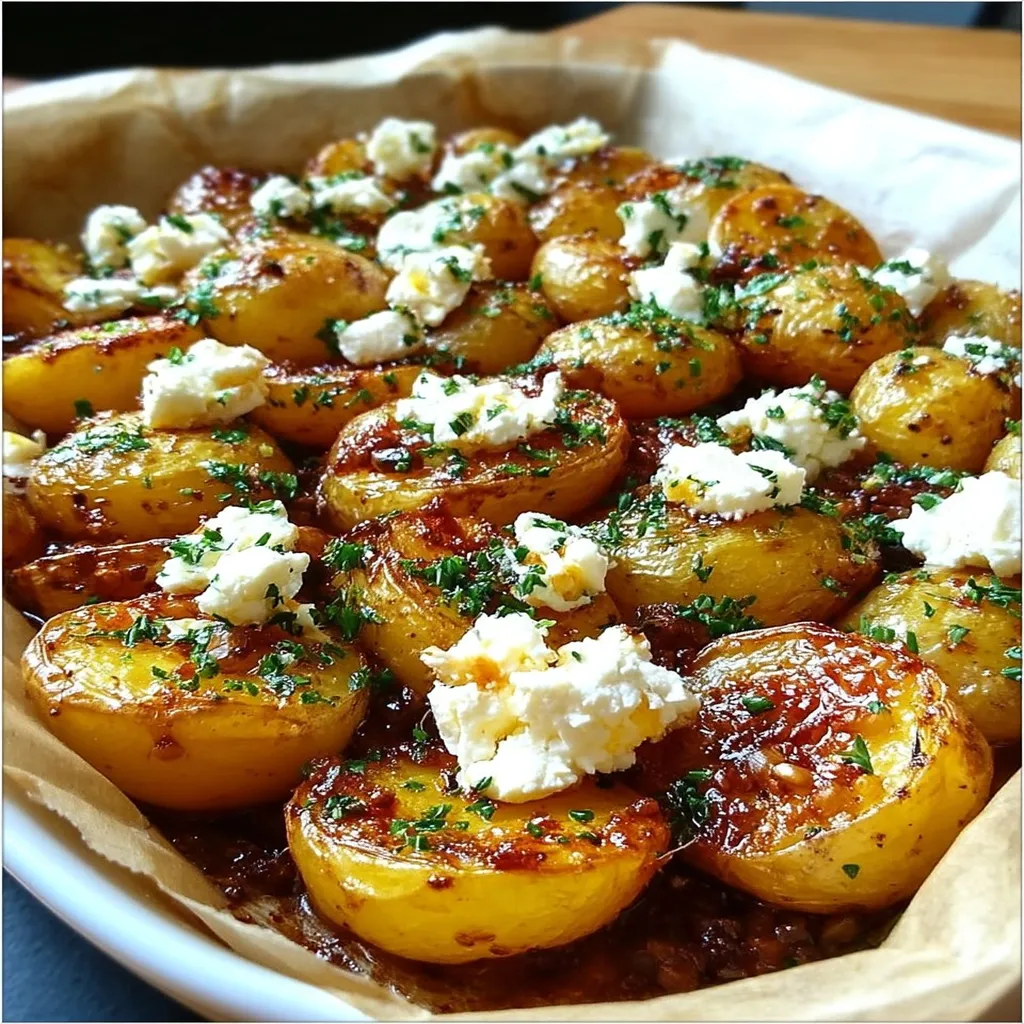
Oh boy, do I have a recipe for you today! Greek roast potatoes with lemon and feta – it’s a mouthful to say, but an even better mouthful to eat. I first discovered this dish on a trip to Greece a few years back, and let me tell you, it was love at first bite. The crispy, golden potatoes, the bright tang of lemon, and the salty, creamy feta – I mean, what’s not to love? For more recipes like this, check out whipped feta dip with honey pistachios and cranberries. For more recipes like this, check out feta stuffed greek chicken meatballs with roasted garlic tzatziki. For more recipes like this, check out berry spinach salad with pecans feta and balsamic glaze. My friend at ultimate easy lemon cookie recipe with cake mix has a similar recipe that you might enjoy. If you love this recipe, you’ll also enjoy mint and lemon infused linden iced tea. I was inspired by chicken and dumplings with a homemade dumpling recipe when creating this recipe. I was inspired by easy asparagus recipes with lemon two ways video when creating this recipe. My friend at lemon garlic cream sauce has a similar recipe that you might enjoy.
Since then, I’ve been making these Greek roast potatoes with lemon and feta on the regular at home. My family can’t get enough of them! I’ll admit, the first few times I tried to recreate the recipe, it was a bit of a disaster.
(Pro tip: don’t forget the olive oil. Just trust me on that one.) But after some trial and error, I’ve got it down to a science.
So, if you’re ready to bring a little taste of Greece to your kitchen, grab your apron and let’s dive in!
Why You’ll Love This Recipe
I’ve found that these Greek roast potatoes with lemon and feta are a hit with just about everyone. They’re crispy on the outside, fluffy on the inside, and packed with flavor. Plus, they’re pretty darn easy to make – no fancy techniques or equipment required.
In my kitchen, this dish is a go-to side for everything from grilled chicken to roasted lamb. But honestly, they’re so good, I could happily eat a whole plate of them on their own. (And I may or may not have done just that on a few occasions…)
Ingredients List
Here’s what you’ll need to make these irresistible Greek roast potatoes with lemon and feta:
- 2 pounds (900g) potatoes, peeled and cut into wedges (I prefer starchy potatoes like Russets)
- 1/2 cup (120ml) olive oil, extra virgin for the best flavor
- 4 cloves garlic, minced (don’t skimp on the garlic, trust me)
- 1 tablespoon dried oregano (or 2 tablespoons fresh if you have it)
- 1 teaspoon salt
- 1/2 teaspoon black pepper
- 1 lemon, zested and juiced (I usually buy an extra lemon for serving)
- 1 cup (150g) feta cheese, crumbled (splurge on the good stuff if you can)
- 1/4 cup (10g) fresh parsley, chopped for garnish
Variations
One of the things I love about this Greek roast potatoes with lemon and feta recipe is how adaptable it is. Here are a few of my favorite variations:
- Herby: Add a tablespoon of fresh thyme, rosemary, or dill for an extra pop of flavor. I tried this once with dill and it was chef’s kiss.
- Spicy: If you like a little heat, add a pinch of red pepper flakes or cayenne to the mix. My husband loves when I make them this way!
- Oniony: Toss in a diced red onion or a bunch of sliced scallions for some extra savory goodness.
- Cheesy: Not a fan of feta? (No judgment!) Swap it out for parmesan, pecorino, or even a sharp cheddar.
- Vegan: Skip the feta and sprinkle with nutritional yeast for a dairy-free version that still packs a flavor punch.
- Sweet Potato: Trade the regular spuds for sweet potatoes for a colorful twist. My kids always ask for seconds when I make this variation.
Servings and Timing
Here’s the lowdown on how much this makes and how long you’ll be in the kitchen:
- Servings: This Greek roast potatoes with lemon and feta recipe serves 4-6 as a side dish.
- Prep Time: 15 minutes (mostly just chopping the potatoes)
- Cook Time: 45-50 minutes
- Total Time: About an hour, give or take
In my experience, this is the perfect amount for a family dinner or small gathering. But if you’re feeding a crowd (or just really, really love Greek roast potatoes with lemon and feta), feel free to double or even triple the recipe.
Step-by-Step Instructions
Alright, let’s get cooking! Here’s how to make these delectable Greek roast potatoes with lemon and feta:
Step 1: Preheat and Prep
First things first, preheat your oven to 425°F (220°C). Trust me, a hot oven is key to getting those potatoes nice and crispy.
While the oven heats up, peel your potatoes and cut them into wedges. I usually aim for about 8 wedges per potato, but you do you. Just try to keep them relatively uniform in size so they cook evenly.
Step 2: Season and Toss
Toss the potato wedges into a large bowl and add the olive oil, minced garlic, oregano, salt, pepper, and lemon zest. Mix it all up until the potatoes are well coated. Don’t be afraid to get in there with your hands – this is rustic cooking at its finest!
Step 3: Roast and Flip
Spread the seasoned potatoes out on a baking sheet in a single layer. (If they’re too crowded, they’ll steam instead of getting crispy.) Pop them in the oven and let them roast for about 25 minutes.
After 25 minutes, take the tray out and give the potatoes a quick flip. This is where my secret weapon comes in – a fish spatula! It’s thin and flexible, perfect for getting under the potatoes without breaking them. Anyway, flip ’em over and stick the tray back in the oven for another 20-25 minutes, until they’re golden brown and crispy.
Step 4: Feta and Finish
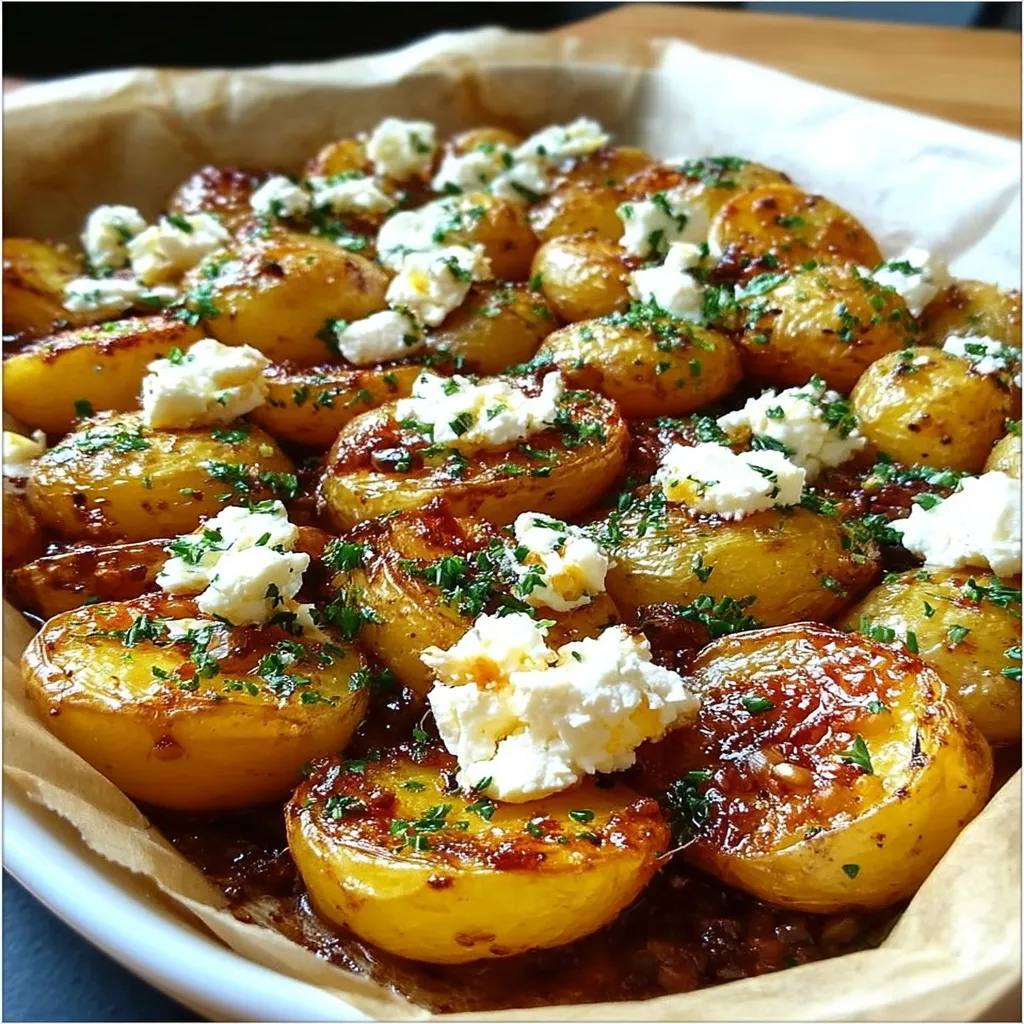
Once the potatoes are roasted to perfection, take them out of the oven and hit them with a generous squeeze of lemon juice. (Pro tip: do this while they’re still hot so they really absorb that bright, citrusy flavor.) Then, sprinkle the crumbled feta all over the top. The heat from the potatoes will soften the feta just a bit and it’ll be absolute heaven.
Finally, garnish with a sprinkle of chopped parsley for a pop of green and serve immediately. And there you have it – the most irresistible Greek roast potatoes with lemon and feta you’ve ever tasted!
Nutritional Information
Alright, I know you’re probably not making Greek roast potatoes with lemon and feta because they’re health food. But just in case you’re curious, here’s the nutritional breakdown per serving (assuming 6 servings):
- Calories: 350
- Fat: 22g (mostly from that delicious olive oil)
- Carbohydrates: 32g
- Fiber: 4g
- Protein: 8g (thanks, feta!)
So, are they the lightest side dish in the world? No. But they’re not too shabby either, especially considering how insanely tasty they are. Everything in moderation, right?
Healthier Alternatives
If you’re looking to lighten things up a bit, here are a few tweaks you can make to this Greek roast potatoes with lemon and feta recipe:
- Reduce the oil: I’ve found you can get away with using a bit less oil – try cutting it down to 1/3 cup. They might not be quite as crispy, but they’ll still be delicious.
- Skip the feta: I know, I know, the feta is half the point. But if you’re watching your fat or salt intake, you can leave it off and still have a tasty side dish.
- Add veggies: Toss in some diced bell peppers, zucchini, or eggplant to up the veggie content. Bonus: they’ll soak up all those delicious lemony, garlicky flavors.
- Use yogurt: For a tangy, creamy topping that’s a bit lighter than feta, try a dollop of Greek yogurt instead.
Serving Suggestions
I love serving these Greek roast potatoes with lemon and feta alongside all sorts of Mediterranean-inspired dishes. Here are a few of my go-tos:
- Grilled meats: Lamb chops, chicken souvlaki, you name it – these potatoes are the perfect accompaniment.
- Mezze spread: Serve them as part of a big spread of dips, pita, and salads for a fun, hands-on meal.
- Grain bowls: Pile them on top of a bed of quinoa or farro with some roasted veggies and a sprinkle of feta for a satisfying vegetarian main.
- Eggs: Hear me out – top a plate of these potatoes with a couple of fried eggs and you’ve got one heck of a delicious breakfast (or lunch, or dinner, no judgment).
At my last dinner party, I served these Greek roast potatoes with lemon and feta alongside some grilled salmon and a big Greek salad, and people went nuts for them. So don’t be afraid to get creative!
Common Mistakes to Avoid
Learn from my mistakes, folks. Here are a few things to watch out for when making Greek roast potatoes with lemon and feta:
- Cutting the potatoes too small: You want wedges, not tiny cubes. If they’re too small, they’ll burn before they get crispy.
- Using the wrong oil: Olive oil is key for flavor and crispiness. I tried using vegetable oil once and it just wasn’t the same.
- Skimping on the seasoning: Don’t be shy with the garlic, oregano, and lemon. These potatoes can handle bold flavors.
- Overcrowding the pan: Like I mentioned before, give those wedges some space to breathe. If they’re too close, they’ll steam instead of crisping up.
Trust me, I’ve made all of these mistakes at one point or another. But now that you know, you can avoid them and make the best darn Greek roast potatoes with lemon and feta on the block.
Storing Tips
I’ll be honest, these Greek roast potatoes with lemon and feta are best straight out of the oven. But if you do end up with leftovers, here’s how to store them:
- In the fridge: Let the potatoes cool completely, then transfer to an airtight container. They’ll keep in the fridge for 3-4 days.
- In the freezer: I wouldn’t recommend freezing these – the texture just isn’t the same once they thaw.
To reheat, spread the potatoes out on a baking sheet and pop them in a 400°F (200°C) oven for about 10-15 minutes, until they’re heated through and re-crisped. (The microwave will work in a pinch, but they won’t be as crispy.)
Frequently Asked Questions
Can I use dried herbs instead of fresh?
Absolutely! If you don’t have fresh oregano or parsley on hand, you can substitute dried. Just use about half as much, since dried herbs are more potent.
My potatoes are sticking to the pan. What do I do?
First, make sure you’re using enough oil – it helps prevent sticking. If they’re still stubbornly stuck, try using a thin metal spatula to gently loosen them. And make sure you’re using a non-stick baking sheet or one that’s well-seasoned.
Can I make these potatoes ahead of time?
You can peel and cut the potatoes a few hours in advance, but I wouldn’t recommend roasting them until right before serving. They’re best fresh out of the oven. If you do need to make them ahead, reheat them in the oven (not the microwave) to crisp them back up.
What’s the best type of potato to use?
I like using starchy potatoes like Russets or Yukon Golds for this recipe. They get nice and fluffy on the inside and crispy on the outside. Waxy potatoes like red potatoes or fingerlings will work, but won’t be quite as crispy.
Can I use a different type of cheese?
Definitely! Feta is traditional, but you could also use parmesan, goat cheese, or even a sharp cheddar. Just make sure it’s a cheese that crumbles well and has a bold flavor.
Do I have to peel the potatoes?
Nope! If you prefer, you can leave the skins on. Just give them a good scrub first to remove any dirt or debris. Personally, I like the texture of peeled potatoes in this recipe, but it’s totally up to you.
Can I make these on the grill?
I haven’t tried it myself, but I bet it would work! You’d want to use a grill basket or some heavy-duty foil to prevent the potatoes from falling through the grates. Grill them over medium-high heat, stirring occasionally, until they’re crispy and golden brown.
What’s the best way to reheat leftovers?
Like I mentioned in the storing tips, the best way to reheat these Greek roast potatoes with lemon and feta is in the oven. Spread them out on a baking sheet and bake at 400°F (200°C) for 10-15 minutes, until they’re hot and crispy. The microwave will work in a pinch, but they won’t be as crispy.
Conclusion
Well folks, there you have it – the ultimate guide to making Greek roast potatoes with lemon and feta at home. I hope you give this recipe a try and love it as much as I do. And if you do make it, be sure to let me know how it turns out! I love hearing from you.
Until next time, happy cooking! And remember, a little extra feta never hurt anyone.