
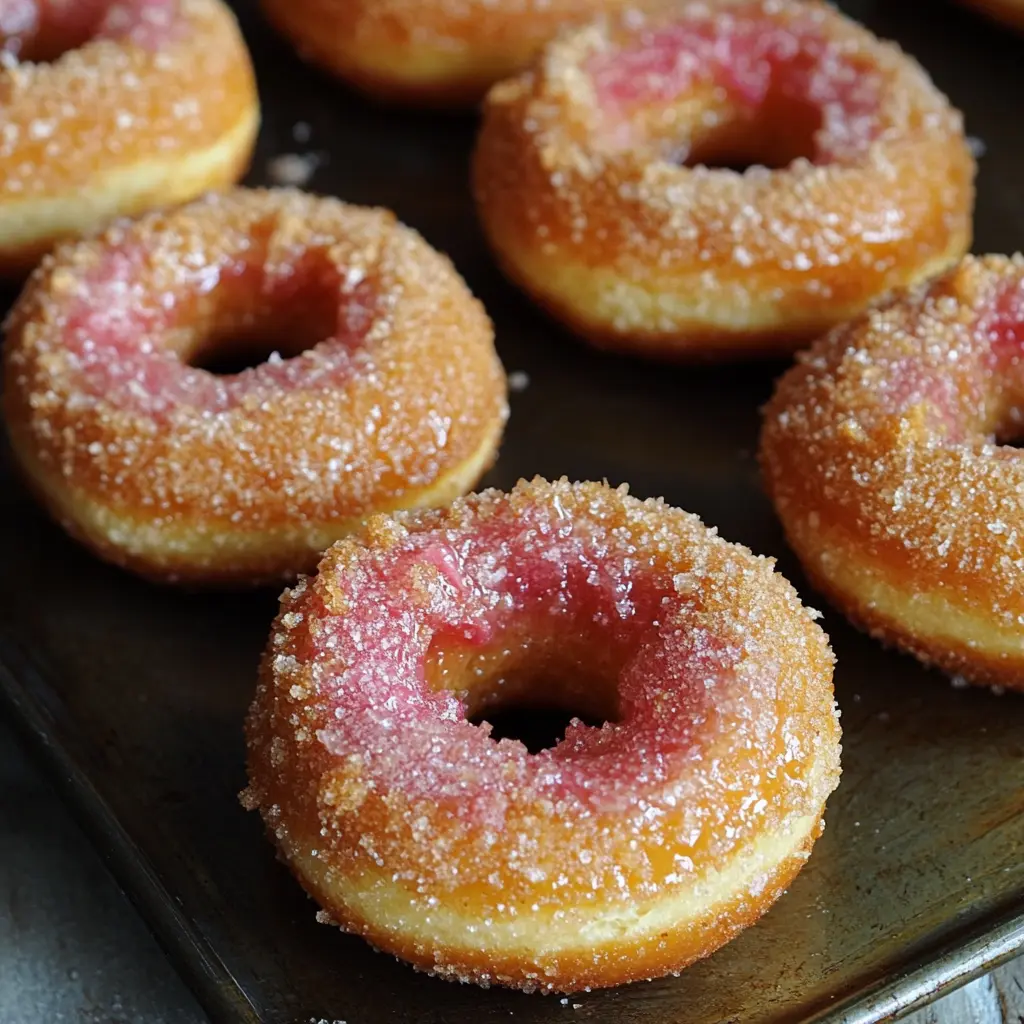
There’s something absolutely magical about the moment these golden-brown beauties emerge from the hot oil, their surfaces crispy and studded with tiny pockets of tangy rhubarb. The kitchen fills with that irresistible doughnut shop aroma, but with an added dimension – the bright, tart notes of spring rhubarb cutting through the sweetness. The first time I made these for Sunday brunch, my usually chatty family fell completely silent as they bit into their first doughnut. Then came the moans of appreciation and the inevitable fight over the last one. My teenage son, who typically grabs a granola bar on his way out the door, actually set his alarm early the next morning hoping for leftovers. When a teenager voluntarily wakes up early for your cooking, you know you’ve struck gold. These aren’t just doughnuts; they’re a revelation that will forever change your expectations of what a cake doughnut can be.
Why This Recipe Works
These rhubarb cake doughnuts succeed where many fail by achieving the perfect balance between tender, cakey interior and crispy exterior while incorporating moisture-rich fruit. The secret lies in the careful preparation of the rhubarb and the precise batter consistency that allows the fruit to distribute evenly without sinking or creating soggy pockets.
The batter is enriched just enough to create a tender crumb without becoming heavy, while the addition of buttermilk provides tang that complements the rhubarb beautifully. I’ve tested countless variations to find the exact proportion of wet to dry ingredients that yields doughnuts that are moist but not dense, light but not fragile.
The frying technique ensures even cooking despite the moisture from the fruit. By maintaining precise oil temperature and using the right frying time, we achieve that coveted crispy exterior that gives way to a tender, fruit-studded interior. My neighbor, who owns a bakery, asked if I’d sell him the recipe. When a professional baker wants your home recipe, you know you’ve created something special.
Key Components Breakdown
Essential Ingredients
Fresh Rhubarb – The star ingredient providing signature tartness and moisture. Choose firm, crisp stalks with vibrant pink or red color. Dice into small, uniform pieces (about 1/4-inch) to ensure even distribution and prevent large pockets of moisture. The smaller dice also prevents the pieces from weighing down the batter. I prefer spring rhubarb for its bright color and tender texture.
All-Purpose Flour – The structural foundation of the doughnuts. The protein content in all-purpose flour provides enough structure to support the fruit while maintaining tenderness. Cake flour would be too delicate, while bread flour would create tough doughnuts. I use unbleached flour for the best flavor.
Baking Powder – The chemical leavener that creates the light, airy texture. Fresh baking powder is crucial – test yours by adding a teaspoon to hot water; it should bubble vigorously. Double-acting baking powder provides lift both when mixed and when heated, perfect for fried doughnuts.
Granulated Sugar – Sweetens the dough while helping create the proper texture. The amount balances the rhubarb’s tartness without making the doughnuts overly sweet. Sugar also helps create that desirable crispy exterior when the doughnuts hit the hot oil.
Buttermilk – Provides moisture, tang, and reacts with the baking powder for extra lift. The acidity complements the rhubarb while creating a more tender crumb. If unavailable, make a substitute with regular milk plus 1 tablespoon lemon juice per cup.
Eggs – Bind the ingredients while adding richness and structure. Room temperature eggs incorporate better into the batter. The proteins in eggs help create the characteristic cake doughnut texture that’s sturdy enough to hold up to frying.
Butter – Adds richness and flavor while contributing to the tender crumb. Melted butter works best in this recipe, distributing evenly throughout the batter. Use unsalted to control the salt level precisely.
Vanilla Extract – Enhances all the other flavors while adding warmth. Pure vanilla extract makes a noticeable difference over imitation. I sometimes add a touch of almond extract for an extra flavor dimension that pairs beautifully with rhubarb.
Equipment Needed
Heavy-Bottomed Dutch Oven or Deep Fryer – Essential for maintaining consistent oil temperature. Cast iron retains heat beautifully, preventing temperature drops when doughnuts are added. A deep fryer offers convenience and precise temperature control.
Candy/Deep Fry Thermometer – Accurate temperature monitoring is crucial for perfect doughnuts. Digital models provide quick readings, while traditional candy thermometers work well too. Maintaining 365-375°F is critical for proper cooking.
Doughnut Cutter – Creates uniform doughnuts with the classic shape. A 3-inch round cutter with a 1-inch center works perfectly. Alternatively, use two round cutters of different sizes or even a drinking glass and shot glass.
Wire Cooling Rack – Allows excess oil to drain while preventing soggy bottoms. Set over a sheet pan to catch drips. The air circulation ensures doughnuts stay crispy as they cool.
Spider Strainer or Slotted Spoon – For safely removing doughnuts from hot oil. The wide, flat design of a spider strainer makes transfers easier and safer than a regular slotted spoon.
Stand Mixer or Hand Mixer – While you can mix by hand, a mixer ensures proper batter development without overmixing. The paddle attachment works best for this thick batter.
The Technique Section
Critical Steps
Preparing the rhubarb properly prevents excess moisture in the doughnuts. After dicing, toss the rhubarb with a tablespoon of flour from your measured amount. This coats the pieces and helps prevent them from sinking in the batter while absorbing excess moisture. Let the floured rhubarb sit while preparing other ingredients – this draws out some moisture that the flour will absorb. The first time I skipped this step, I ended up with soggy spots around each piece of rhubarb.
Creating the proper batter consistency is crucial for successful frying. The batter should be thick enough to coat a spoon heavily but still drop off in a thick ribbon. Too thin and the doughnuts spread in the oil; too thick and they don’t cook through properly. Mix just until ingredients are combined – overmixing develops gluten, resulting in tough doughnuts.
Maintaining oil temperature throughout frying ensures consistent results. Start at 375°F, knowing the temperature will drop when you add doughnuts. Never overcrowd the pot – fry only 2-3 at a time to prevent temperature drops. Allow oil to return to 375°F between batches. I learned this lesson the hard way when my first batch absorbed oil like sponges due to too-low temperature.
The frying technique determines texture success. Gently slide doughnuts into oil to prevent splashing. Fry for 1-2 minutes on the first side until deep golden brown, then flip and fry for another 1-2 minutes. The doughnuts should float and bubble actively. Watch the color carefully – they go from perfect to burnt quickly.
Draining properly ensures crispy doughnuts that aren’t greasy. Transfer immediately to a wire rack, not paper towels which can make the bottoms soggy. Let excess oil drip off for 30 seconds before moving to the cooling rack. Proper draining makes the difference between light, crispy doughnuts and heavy, oily ones.
Temperature and Timing
Oil temperature is the most critical factor for success. Maintain 365-375°F throughout frying. Below 365°F, doughnuts absorb excess oil and become greasy. Above 375°F, they brown too quickly outside while remaining raw inside. Check temperature frequently and adjust heat as needed.
Mixing time affects texture significantly. Once wet and dry ingredients are combined, mix just until no flour streaks remain – about 30 seconds with a mixer, 1 minute by hand. Overmixing creates tough, dense doughnuts by developing too much gluten.
Resting the batter for 10-15 minutes before frying allows the flour to fully hydrate and the baking powder to begin working. This rest period improves texture and makes the batter easier to handle. I discovered this accidentally when interrupted mid-recipe, and the rested batter produced noticeably better doughnuts.
Frying time varies slightly based on size and oil temperature, but generally takes 2-4 minutes total. The doughnuts are done when they’re deep golden brown on both sides and a toothpick inserted in the center comes out clean. Underfrying results in raw centers; overfrying creates dry, tough doughnuts.
Optimal serving temperature is slightly warm or room temperature. The contrast between crispy exterior and tender interior is most pronounced when served within 2 hours of frying. They remain delicious for up to 2 days but are truly transcendent when fresh.
Troubleshooting Guide
Common Issues
Soggy, greasy doughnuts? Oil temperature was too low, allowing excessive oil absorption. Check your thermometer’s accuracy and maintain proper temperature. For the current batch, the damage is done, but serve them warm to minimize the greasy mouthfeel. Next time, be vigilant about temperature monitoring.
Dense, heavy texture? Overmixing developed too much gluten, or the batter was too thick. For this batch, serve with whipped cream or ice cream to add lightness. Future batches require gentler mixing and careful attention to batter consistency.
Raw centers? Oil temperature was too high, causing rapid external browning before the interior cooked. Unfortunately, these can’t be fixed without re-frying, which would make them too dark. Next time, lower the oil temperature and extend frying time slightly.
Rhubarb sinking to bottom? Pieces were too large or not properly coated with flour. For aesthetic purposes, this batch is compromised but still delicious. Next time, cut smaller pieces and toss thoroughly with flour before folding into batter.
Doughnuts falling apart in oil? Batter was too thin or contained too much moisture from the rhubarb. Handle the current batch very gently when removing from oil. In the future, add a bit more flour to achieve proper consistency, and ensure rhubarb is well-drained.
Variations and Adaptations
Seasonal Options
Spring strawberry-rhubarb: Combine 3/4 cup diced rhubarb with 1/4 cup diced strawberries for the classic pairing. The strawberries add sweetness and beautiful color. This combination is my family’s most requested variation.
Summer berry blend: Replace rhubarb with a mixture of blueberries, raspberries, and diced peaches. Reduce liquid slightly as these fruits release less moisture than rhubarb. The multicolored fruit creates beautiful, festive doughnuts.
Fall apple-rhubarb: Use equal parts diced apple and rhubarb with a pinch of cinnamon in the batter. The apples add sweetness while maintaining the tart edge from rhubarb. Perfect for using late-season rhubarb.
Winter citrus: When rhubarb is out of season, use candied orange peel and a touch of cardamom for a completely different but equally delicious flavor profile. These transport you to warmer days even in the depths of winter.
Dietary Modifications
For gluten-free doughnuts, use a 1:1 gluten-free flour blend with xanthan gum. Add an extra egg for structure. The texture will be slightly different but still delicious. Several celiac friends request these regularly.
Dairy-free version: Replace buttermilk with almond or oat milk mixed with 1 tablespoon vinegar. Use vegan butter or coconut oil instead of regular butter. The coconut oil adds subtle tropical notes that complement the fruit.
Lower sugar option: Reduce sugar by up to 25% without significantly affecting texture. Compensate with a sprinkle of cinnamon sugar while still warm. The rhubarb’s natural tartness means these don’t need excessive sweetness.
Egg-free adaptation: Replace each egg with a “flax egg” (1 tablespoon ground flaxseed plus 3 tablespoons water, mixed and gelled). Add an extra tablespoon of oil for moisture. The texture is slightly denser but still cake-like.
Storage and Make-Ahead
Fresh doughnuts are incomparable, but proper storage extends their life. Store in an airtight container at room temperature for up to 2 days. Don’t refrigerate, which accelerates staling. Line containers with paper towels to absorb excess oil.
For longer storage, freeze unfrosted doughnuts in a single layer, then transfer to freezer bags once solid. They keep for up to 3 months. Thaw at room temperature and refresh in a 350°F oven for 3-5 minutes to restore crispness.
The batter can be made up to 24 hours ahead and refrigerated. Bring to room temperature before frying and stir gently to recombine. The resting time actually improves flavor development.
Day-old doughnuts benefit from creative repurposing. Slice and toast for an incredible bread pudding base, or crumble over ice cream. Some people actually prefer them slightly stale, claiming the flavors meld beautifully overnight.
Never prepare fried doughnuts more than a few hours before serving if you want that perfect texture. However, having batter ready in the fridge means fresh doughnuts are only 20 minutes away – perfect for impressing overnight guests.
FAQ
Can I use frozen rhubarb?
Yes, but thaw completely and drain thoroughly first. Frozen rhubarb releases significantly more moisture than fresh, so you may need to add 2-3 tablespoons extra flour to compensate. Pat the thawed rhubarb dry and toss with flour before using. The flavor remains excellent, though the color may be less vibrant.
What’s the best oil for frying doughnuts?
Neutral oils with high smoke points work best. Canola, vegetable, or peanut oil are ideal choices. Avoid olive oil or butter, which burn at frying temperatures. Some bakers swear by adding a tablespoon of solid shortening to the oil for crispier results. Use fresh oil for the best flavor – oil that’s been used multiple times can impart off-flavors.
Why are my doughnuts absorbing too much oil?
Temperature is the usual culprit. Oil below 365°F causes excessive absorption as doughnuts take longer to cook. Other factors include overly wet batter, overcrowding the pot, or not draining properly after frying. Invest in a reliable thermometer and monitor temperature constantly. Remember that adding room temperature doughnuts drops oil temperature significantly.
Can I bake these instead of frying?
While you can bake the batter in doughnut pans at 375°F for 12-15 minutes, the result is completely different. Baked versions are essentially rhubarb muffins in doughnut shape – delicious, but lacking the characteristic crispy exterior and light interior of true cake doughnuts. If you prefer baking, consider adding extra butter to the batter for moisture.
Closing Thoughts
The best doughnut moments happen when that first bite delivers everything promised by the aroma – the satisfying crunch giving way to tender cake studded with pockets of tangy rhubarb, the play of sweet against tart, the contrast of crispy and soft. There’s something deeply satisfying about mastering a recipe that seems complicated but becomes second nature with practice.
Around here, these rhubarb cake doughnuts have become our special occasion breakfast. My daughter requests them for her birthday every May, right when rhubarb is at its peak. She’s graduated from watching to helping, carefully monitoring oil temperature with the focus of a professional baker. These are the kitchen memories I treasure most – passing down not just recipes, but the confidence to tackle seemingly difficult techniques.
I couldn’t resist bringing a batch to our school’s teacher appreciation breakfast last spring. By 9 am, teachers were asking if I took orders, and the principal jokingly offered me a part-time position as the school baker. There’s something wonderful about sharing a recipe that brings such genuine joy – watching eyes light up at that first bite never gets old.
Whether you’re an experienced baker or frying doughnuts for the first time, this recipe offers both delicious rewards and valuable lessons in technique. The combination of tangy rhubarb and sweet, crispy doughnut creates something that feels special enough for celebrations yet approachable enough for a weekend project. I hope they bring as much happiness to your kitchen as they have to mine!
PrintRhubarb Cake Doughnuts
Old-fashioned cake doughnuts studded with tangy rhubarb, fried to golden perfection with a crispy exterior and tender, fruit-filled interior
Prep Time: 30 minutes | Rest Time: 15 minutes | Cook Time: 20 minutes | Total Time: 1 hour 15 minutes | Servings: 12-14 doughnuts
Ingredients
For the Doughnuts:
- 1 cup diced fresh rhubarb (1/4-inch pieces)
- 2 cups all-purpose flour, plus 1 tablespoon for coating rhubarb
- 1 teaspoon baking powder
- 1/2 teaspoon baking soda
- 1/2 teaspoon salt
- 1/2 teaspoon ground cinnamon
- 1/4 teaspoon ground nutmeg
- 2/3 cup granulated sugar
- 2 large eggs, room temperature
- 3/4 cup buttermilk, room temperature
- 1/4 cup unsalted butter, melted and cooled
- 1 teaspoon vanilla extract
- 1/2 teaspoon almond extract (optional)
- Vegetable oil for frying (about 6 cups)
For the Coating Options:
- Cinnamon Sugar: 1/2 cup granulated sugar + 1 tablespoon ground cinnamon
- Powdered Sugar: 1 cup powdered sugar for dusting
- Vanilla Glaze: 2 cups powdered sugar + 3-4 tablespoons milk + 1 teaspoon vanilla
Instructions
- Prepare the rhubarb: Dice rhubarb into small, uniform pieces about 1/4-inch. Toss with 1 tablespoon flour until evenly coated. Set aside while preparing the batter. This prevents the fruit from sinking and helps absorb excess moisture.
- Mix dry ingredients: In a large bowl, whisk together 2 cups flour, baking powder, baking soda, salt, cinnamon, and nutmeg. Create a well in the center.
- Combine wet ingredients: In a separate bowl, whisk together sugar and eggs until light and fluffy, about 2 minutes. Add buttermilk, melted butter, vanilla extract, and almond extract (if using). Mix until well combined.
- Create the batter: Pour the wet ingredients into the well of dry ingredients. Using a wooden spoon or rubber spatula, gently fold together just until no flour streaks remain. Do not overmix – the batter should be thick and slightly lumpy.
- Add rhubarb: Gently fold the flour-coated rhubarb into the batter until evenly distributed. Let the batter rest for 10-15 minutes while heating the oil. This rest period helps the flour hydrate and improves texture.
- Heat the oil: In a heavy-bottomed Dutch oven or deep fryer, heat oil to 375°F (190°C). Use a candy thermometer for accuracy. The oil should be at least 3 inches deep.
- Prepare coatings: Place your chosen coating(s) in shallow bowls. Line a sheet pan with paper towels and set a wire rack on top for draining.
- Test the oil: Drop a small spoonful of batter into the oil. It should sizzle immediately and float to the surface within seconds. Adjust temperature if needed.
- Form doughnuts: Using a doughnut cutter or two round cutters, cut doughnuts from the chilled batter. Re-roll scraps once. Alternatively, use a small ice cream scoop to drop round doughnut holes.
- Fry the doughnuts: Carefully slide 2-3 doughnuts into the hot oil. Don’t overcrowd. Fry for 1-2 minutes until deep golden brown, then flip and fry for another 1-2 minutes. They should float and bubble actively.
- Check for doneness: The doughnuts are ready when they’re deep golden brown on both sides and sound hollow when tapped. A toothpick inserted should come out clean.
- Drain properly: Using a spider strainer or slotted spoon, transfer doughnuts to the wire rack. Let drain for 30 seconds before coating or glazing.
- Coat while warm: For cinnamon sugar or powdered sugar, coat while the doughnuts are still warm. For glaze, let cool for 5 minutes first to prevent melting.
- Continue frying: Return oil to 375°F between batches. Fry remaining doughnuts, including any doughnut holes from centers.
- Serve fresh: These doughnuts are best served within 2 hours of frying, while the contrast between crispy exterior and tender interior is most pronounced.
Notes:
- Choose rhubarb that’s bright pink or red for the best color in the finished doughnuts
- The key to non-greasy doughnuts is maintaining proper oil temperature throughout frying
- Don’t skip the resting period – it significantly improves texture
- Doughnut holes cook faster than full doughnuts, usually needing only 30-45 seconds per side
- For a special touch, split glazed doughnuts and fill with sweetened whipped cream
Nutritional Information:
Per doughnut (unglazed): Calories: 195, Protein: 3g, Carbohydrates: 28g, Fat: 8g, Fiber: 1g, Sugar: 12g
Storage Tips:
Store in an airtight container at room temperature for up to 2 days. Don’t stack glazed doughnuts. For best results, refresh day-old doughnuts in a 350°F oven for 3-5 minutes. Freeze unglazed doughnuts for up to 3 months; thaw and warm before serving.
In reality, what makes these rhubarb cake doughnuts truly special isn’t just their perfect balance of tart and sweet or their irresistible texture – it’s the way they transform an ordinary morning into something memorable. The process of making doughnuts from scratch, from mixing the batter to that thrilling moment of dropping them into hot oil, connects us to generations of bakers who knew that some things are worth the extra effort. Whether shared with family around the breakfast table or brought to a gathering where they disappear in minutes, these doughnuts create the kind of food memories that last long after the last crumb is gone. They’re proof that sometimes the best recipes are those that challenge us just enough to make us proud, while delivering results that make everyone wonder if you’ve been hiding a professional bakery in your basement.