
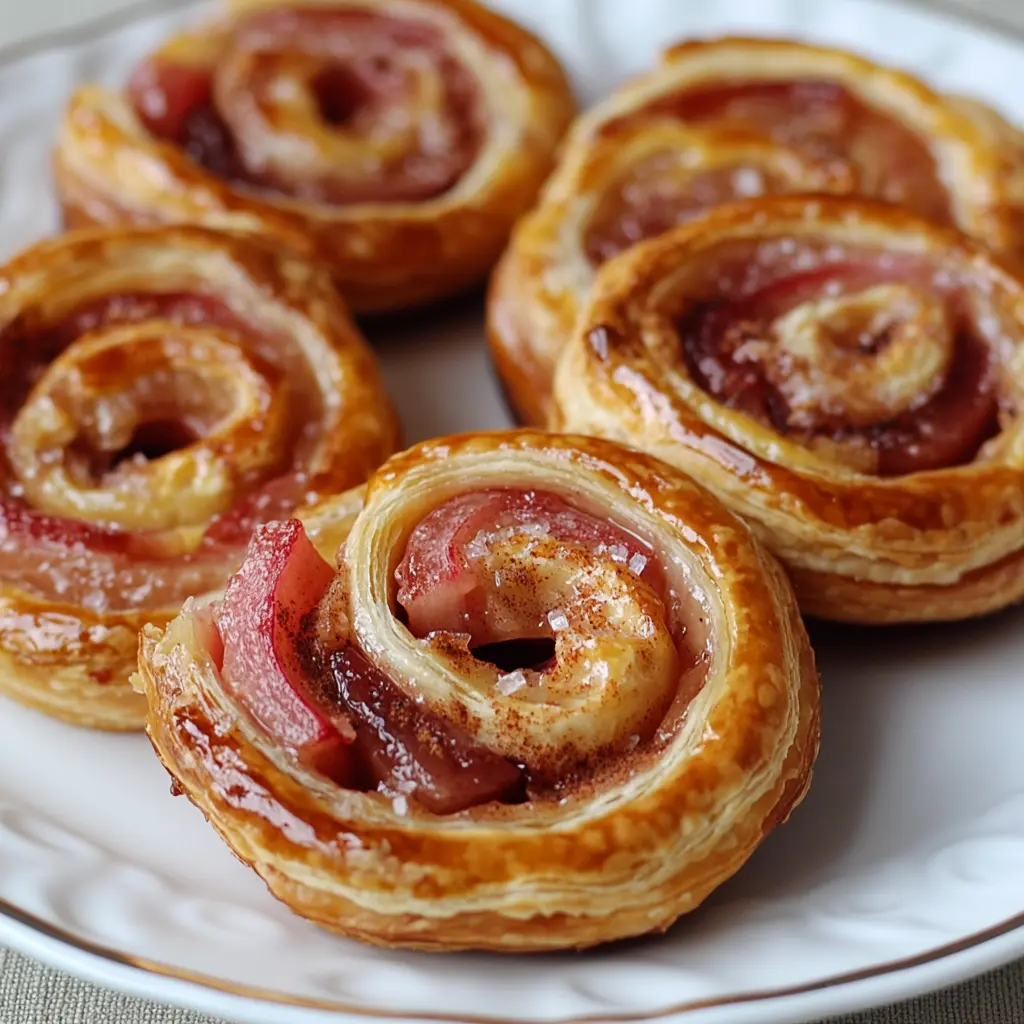
The first time I made Rhubarb Palmiers was for an impromptu spring garden party. Running short on time and ingredients, I remembered the puff pastry in my freezer and the rhubarb growing along my garden fence. Fifteen minutes of prep and a brief stint in the oven later, these buttery, tart-sweet cookies emerged—transforming a potentially stressful hosting moment into what became my signature spring treat. Guests couldn’t believe something so elegant came together so quickly. The way the caramelized sugar creates a crackling exterior while the rhubarb adds pockets of jammy tartness makes these palmiers both rustic and sophisticated. I’ve never had a batch last longer than an hour when shared—they’re that irresistible.
About This Recipe
Palmiers (pronounced “palm-YAYs”) are classic French pastries made by folding sugar-dusted puff pastry into a distinctive heart or butterfly shape. Traditional versions feature just sugar and pastry, but this rhubarb variation adds a seasonal twist that elevates the simple cookie into something truly special.
What makes these Rhubarb Palmiers unique is the way the fruit’s natural acidity balances the richness of the buttery pastry. As the palmiers bake, the rhubarb releases its juices, which combine with the sugar to create pockets of tangy caramel throughout each crisp, flaky layer. The cinnamon adds warmth that rounds out the flavor profile beautifully.
This recipe is perfect for spring entertaining when rhubarb is at its peak, particularly for afternoon tea gatherings, brunch buffets, or paired with after-dinner coffee. They’re especially wonderful for impressing guests when you’re short on time but want something that looks and tastes like you spent hours in the kitchen. My family even enjoys them broken up over vanilla ice cream for an easy but elegant dessert.
Why You’ll Love This Recipe
- Achieves the perfect balance of buttery, flaky pastry with pockets of tart-sweet rhubarb and warming cinnamon—creating a more complex and interesting flavor profile than traditional palmiers.
- Requires just four ingredients and about 15 minutes of active preparation time, yet yields results that look like they came from a high-end French patisserie.
- Creates an impressive visual presentation with their caramelized, multi-layered spirals that adds instant sophistication to any dessert plate or cookie platter.
- Can be prepared in advance and frozen either before or after baking, making them perfect for last-minute entertaining or satisfying sudden sweet cravings.
Essential Ingredients
Puff Pastry – The foundation of any good palmier. All-butter puff pastry yields the best flavor and texture, with Dufour and Trader Joe’s offering excellent store-bought options. Always thaw overnight in the refrigerator rather than at room temperature to maintain the pastry’s layers. One standard sheet (typically around 14 x 9 inches) makes about 20-24 palmiers.
Fresh Rhubarb – Look for firm, crisp stalks with a vibrant pink or red color for the best flavor and that beautiful ruby hue. Spring rhubarb (April-June) tends to be more tender than late-season rhubarb. Dice it small (about ¼-inch pieces) to ensure even distribution and proper cooking. Frozen rhubarb can work but must be completely thawed and thoroughly patted dry to prevent soggy pastries.
Granulated Sugar – Regular white sugar creates the perfect crisp, caramelized exterior. Sugar with larger crystals like natural cane sugar adds a pleasant crunch but may not adhere as well to the pastry. I avoid brown sugar in this recipe as its moisture content can prevent proper crisping.
Cinnamon – Adds a warm, aromatic quality that balances rhubarb’s tartness beautifully. Use fresh, high-quality cinnamon for the best flavor—I prefer Ceylon cinnamon for its more delicate, complex profile, but standard Cassia cinnamon works wonderfully too. Always store cinnamon in an airtight container away from heat and light to preserve its potency.
Kitchen Equipment
A large, clean work surface is essential for rolling and folding your palmiers—a marble pastry board stays cool and helps prevent the butter in the puff pastry from melting during handling, but any clean countertop works well. Keep a ruler nearby to ensure even measurements when folding.
You’ll need a rolling pin to gently flatten the pastry and press the rhubarb-sugar mixture into the surface. A sharp knife or pizza cutter makes clean cuts for consistent portions. Two baking sheets lined with parchment paper or silicone mats are crucial for easy release—palmiers’ high sugar content means they’ll stick to unlined pans.
A pastry brush is helpful for sweeping away excess flour, though clean hands work just as well. Keep a small offset spatula handy for transferring the delicate unbaked palmiers to the baking sheet. A cooling rack is important for maintaining crispness as the palmiers cool.
Step-by-Step Instructions
Prep Work (10 minutes)
- Remove your puff pastry sheet from the refrigerator and let it rest at room temperature for about 5 minutes—just enough to make it pliable but not warm. Meanwhile, preheat your oven to 400°F (200°C) and line two baking sheets with parchment paper.
- Rinse 1 cup of fresh rhubarb and pat it completely dry with paper towels. Trim the ends and dice into very small pieces, about ¼-inch in size. The smaller pieces ensure better distribution and faster cooking.
- In a small bowl, mix together ½ cup granulated sugar and ½ tablespoon cinnamon until evenly combined. The mixture should be a light brown color with the cinnamon thoroughly distributed.
Assembling the Palmiers (5 minutes)
- Lightly dust your work surface with a small amount of flour. Unroll or unfold the puff pastry sheet and gently roll it into a rectangle approximately 12 x 14 inches. The pastry should be about ⅛-inch thick. Work quickly but gently to keep the pastry cool—warm pastry will not create distinct layers.
- Sprinkle approximately ⅓ of the cinnamon-sugar mixture evenly over the entire surface of the pastry, leaving a ¼-inch border along one long edge. Press the sugar mixture gently into the dough with your rolling pin.
- Distribute the diced rhubarb evenly over the sugared surface, again avoiding the ¼-inch border you left clean. Don’t be tempted to add more rhubarb than called for—excess moisture will make the pastries soggy rather than crisp.
- Sprinkle another ⅓ of the cinnamon-sugar mixture over the rhubarb, reserving the final ⅓ for later.
Folding and Cutting (5 minutes)
- Starting with the long edge that has sugar all the way to the edge (not the border side), fold the pastry inward about 1 inch. Continue folding that same edge in 1-inch increments until you reach the middle of the pastry sheet. Each fold should be neat and tight, but not so firm that you squeeze out the rhubarb pieces.
- Repeat the folding process from the opposite long edge until the two folded sides meet in the middle. If at any point the pastry becomes too soft or sticky, place it in the refrigerator for 10 minutes to firm up before continuing.
- Fold one half over the other, like closing a book, creating the characteristic palmier shape with multiple layers. Gently press the folded pastry to seal it.
- Using a sharp knife or bench scraper, cut the folded pastry crosswise into slices about ½-inch thick. Each slice will create one palmier.
Baking and Finishing (15-18 minutes)
- Place the cut palmiers on your prepared baking sheets, laying them flat and spacing them at least 2 inches apart. They will expand significantly during baking.
- Sprinkle the remaining cinnamon-sugar mixture over the tops of the palmiers. Lightly press the sugar onto the surface.
- Bake in the preheated oven for 12-15 minutes, until the palmiers are deeply golden and caramelized on the bottom. Listen for a gentle sizzling sound—that’s the sugar caramelizing.
- Using a spatula, carefully flip each palmier and bake for an additional 3-5 minutes until both sides are crisp and caramelized. Watch them carefully at this stage as they can go from perfect to burnt very quickly.
- Remove from the oven and allow to cool on the baking sheet for 2 minutes, then transfer to a wire rack to cool completely. They will crisp up further as they cool.
Chef’s Tips & Tricks
The secret to perfect Rhubarb Palmiers is keeping everything cold until the moment they go into the oven. After years of making these treats, I’ve learned that if the pastry feels soft at any point during preparation, simply pause and refrigerate it for 10 minutes before continuing. This prevents the butter layers from merging and ensures that signature flaky texture.
Don’t worry if some rhubarb juice leaks out during baking—this creates delicious caramelized edges that many consider the best part. However, if you notice excessive juice, your rhubarb pieces may be too large or too wet. Patting them very dry before using is crucial.
My family always loves these served slightly warm, about 10 minutes after coming out of the oven. That’s when the contrast between the crisp exterior and the slightly chewy center is at its peak. However, they maintain excellent texture for 2-3 days when stored properly in an airtight container.
For make-ahead convenience, you can freeze the unbaked, sliced palmiers on a baking sheet, then transfer to a freezer bag once solid. Bake directly from frozen, adding just 2-3 minutes to the baking time.
Recipe Variations
For a citrus twist, add the zest of one orange or lemon to your cinnamon-sugar mixture. The bright notes complement the rhubarb beautifully and add another dimension to the flavor profile.
When rhubarb isn’t in season, substitute finely diced apple tossed with a squeeze of lemon juice for a similar tart-sweet experience. Pears work wonderfully too, especially with a pinch of cardamom added to the cinnamon-sugar.
For a more decadent version, drizzle the cooled palmiers with a simple glaze made from powdered sugar and a splash of milk or cream. The additional sweetness balances rhubarb’s natural tartness perfectly.
My personal favorite variation includes a sprinkle of finely chopped pistachios over the rhubarb layer before folding. The nuts add a lovely textural contrast and their subtle flavor pairs exceptionally well with the rhubarb and cinnamon.
FAQ Section
Can I use frozen rhubarb for this recipe? Yes, but it must be completely thawed and thoroughly patted dry with paper towels to remove excess moisture. Fresh rhubarb yields the best texture, but frozen works in a pinch during off-season months.
My palmiers didn’t get crispy. What went wrong? Three common issues cause soft palmiers: rhubarb pieces that were too wet, pastry that got too warm during preparation, or insufficient baking time. Make sure to pat rhubarb very dry, keep pastry cold, and bake until deeply golden on both sides.
How long will these palmiers stay fresh? Stored in an airtight container at room temperature, they maintain good texture for 2-3 days. To refresh slightly softened palmiers, place them in a 300°F oven for 3-5 minutes.
Can I make these with homemade puff pastry? Absolutely! Homemade puff pastry works beautifully, though it’s a time-intensive project. If using homemade, make sure it’s well-chilled and rolled to the same thickness as store-bought (about ⅛-inch).
Final Thoughts
Don’t be intimidated by the French name or elegant appearance—these Rhubarb Palmiers are surprisingly forgiving and adaptable. The trick is not perfection, but confidence in each fold and cut. What makes them special is precisely their handmade quality, with each one slightly different from the next. Share them proudly as an elevated alternative to ordinary cookies, and I guarantee you’ll start receiving requests to bring “those amazing rhubarb things” to every gathering. Trust me on this: once you master this simple technique, you’ll find yourself creating palmier variations throughout the year, though these spring rhubarb ones will always remain the showstopper.
PrintCrispy Rhubarb Palmiers
Buttery, flaky puff pastry cookies filled with tart rhubarb and warm cinnamon-sugar for an elegant French-inspired treat.
Prep Time: 15 minutes | Cook Time: 18 minutes | Total Time: 33 minutes | Servings: 20-24 palmiers
Ingredients
- 1 sheet puff pastry (approximately 14 x 9 inches), thawed but cold
- 1 cup fresh rhubarb, finely diced (about ¼-inch pieces)
- ½ cup granulated sugar
- ½ tablespoon ground cinnamon
Instructions
- Preheat oven to 400°F (200°C). Line two baking sheets with parchment paper.
- Mix sugar and cinnamon in a small bowl until well combined.
- On a lightly floured surface, roll puff pastry to approximately 12 x 14 inches (about ⅛-inch thick).
- Sprinkle ⅓ of cinnamon-sugar mixture over the pastry, leaving a ¼-inch border along one long edge. Press sugar gently into the dough with a rolling pin.
- Distribute diced rhubarb evenly over the sugared surface, avoiding the ¼-inch border. Sprinkle another ⅓ of cinnamon-sugar over the rhubarb.
- Starting from the long edge without the border, fold the pastry inward in 1-inch increments until you reach the middle. Repeat from the opposite side until the two folded sides meet.
- Fold one half over the other like closing a book. Gently press to seal.
- Cut the folded pastry crosswise into ½-inch slices.
- Place palmiers on prepared baking sheets 2 inches apart. Sprinkle with remaining cinnamon-sugar.
- Bake for 12-15 minutes until deeply golden on the bottom, then flip each palmier and bake 3-5 minutes more until crisp and caramelized on both sides.
- Cool on baking sheet for 2 minutes, then transfer to a wire rack to cool completely.
Notes:
- Keep puff pastry cold during preparation for best results.
- Pat rhubarb very dry to prevent soggy palmiers.
- Store in an airtight container at room temperature for up to 3 days.
- Unbaked palmiers can be frozen for up to 1 month and baked directly from frozen.
Nutrition (Per Palmier): Calories: 95, Fat: 5g, Carbohydrates: 11g, Protein: 1g, Fiber: 0.5g, Sugar: 6g